The Complete Age-Appropriate Chore Chart: Ages 3-16
Research-backed chore recommendations by age group. Learn which tasks are right for your child's development stage.
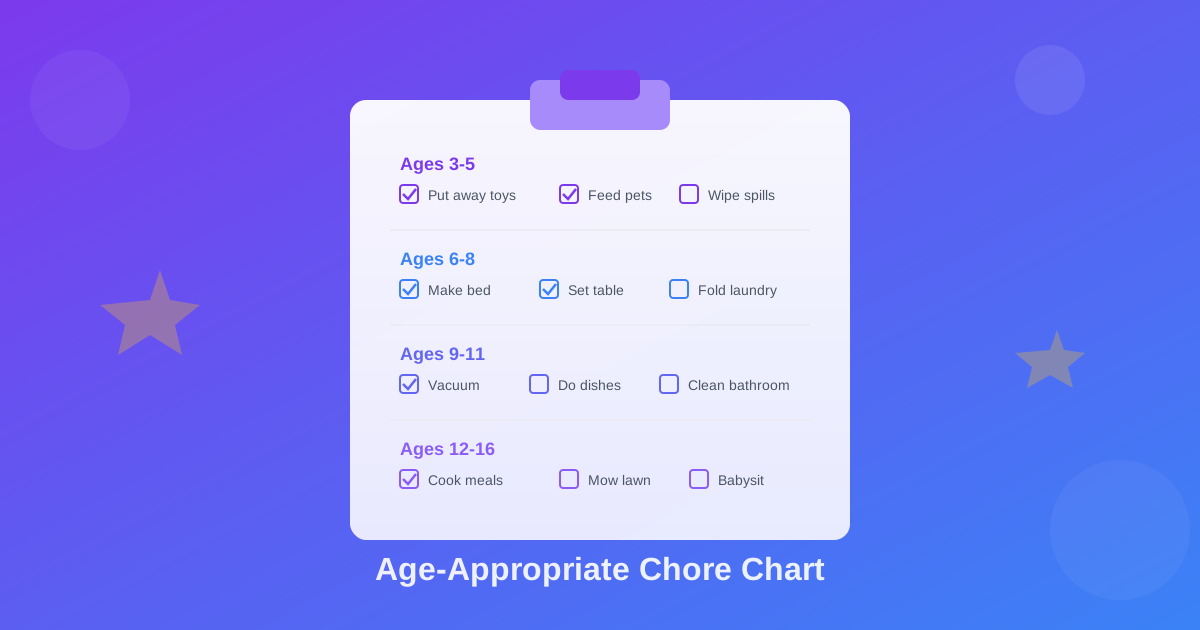
TL;DR
Kids as young as 3 can start with simple tasks like putting away toys. By 12-16, they can handle laundry, cooking simple meals, and managing schedules. The key is matching task complexity to developmental stage.
Children as young as three can begin contributing to the household with simple, supervised tasks — and research consistently shows they should. Giving kids age-appropriate chores builds responsibility, executive function, self-esteem, and life skills that persist into adulthood. The key is matching the right tasks to the right developmental stage so children feel challenged but not overwhelmed.
Below is a comprehensive, research-backed chore chart broken down by age group, along with practical advice for making chores stick in your household.
Why Do Chores Matter for Child Development?
Before diving into the specifics, it helps to understand why developmental psychologists are so emphatic about chores. A landmark longitudinal study by Marty Rossmann at the University of Minnesota tracked participants from age 3 through their mid-twenties. The single strongest predictor of young adult success — defined as completing education, starting a career, and building healthy relationships — was whether they had participated in household chores starting at age 3 or 4.
Chores teach children several critical skills simultaneously:
- Responsibility: “This is my job, and the family is counting on me.”
- Executive function: Planning, sequencing steps, and completing multi-part tasks.
- Delayed gratification: Finishing an unpleasant task now for a benefit later.
- Self-efficacy: “I am capable of contributing to my household.”
- Work ethic: Effort produces results.
The Rossmann study found that the age at which chores began mattered more than the amount of chores assigned. Children who started at 3-4 had significantly better outcomes than those who started in their teens — even when the teens did more total work. Starting early builds the habit; the specific tasks are secondary.
What Chores Are Right for Ages 3-5?
At this stage, children are developing gross motor skills, learning to follow simple instructions, and building their sense of independence. Tasks should be concrete, visual, and satisfying to complete. Expect to model the task many times and provide consistent supervision.
Recommended tasks:
- Put toys back in designated bins or shelves
- Place dirty clothes in the hamper
- Help feed pets (with pre-measured food)
- Wipe up small spills with a cloth
- Help set napkins and plastic cups on the table
- Put books back on the shelf
- Water plants with a small watering can
- Help sort laundry by color (make it a game)
- Throw trash in the garbage can
- Help make the bed (pulling up the comforter)
Developmental notes: Three-to-five-year-olds thrive on routine and visual cues. Use picture-based chore charts that show what “done” looks like. Keep task lists short — two to three daily chores is plenty. Praise the effort, not just the result, because their execution will be imperfect and that is perfectly fine.
Quibbix Tip
For younger kids, assign low Quibb values (1-2 Quibbs) to these simple tasks and create small, immediately accessible rewards. At this age, the connection between action and reward needs to be fast — saving for a week feels like an eternity to a four-year-old.
What Chores Work for Ages 6-8?
Children in early elementary school have better fine motor skills, can follow multi-step instructions, and are beginning to understand time management. This is the stage where chores shift from “helping” to “owning” — the child is responsible for completing the task independently, even if it still needs occasional checking.
Recommended tasks:
- Make their bed independently
- Clear their plate and utensils after meals
- Set the full table (plates, utensils, napkins)
- Help load the dishwasher (non-breakable items)
- Fold simple laundry items (towels, underwear, socks)
- Put away their own laundry
- Feed and water pets independently
- Sweep floors with a child-sized broom
- Wipe down bathroom sinks and counters
- Help prepare simple snacks (spreading peanut butter, pouring cereal)
- Take out small trash bags
- Organize their backpack and school supplies
- Water the garden or indoor plants
Developmental notes: At this age, children benefit from checklists they can read themselves. Transitioning from picture-based charts to simple written lists builds literacy skills alongside responsibility. Expect occasional resistance — this is normal as children test boundaries. Consistency matters more than perfection.
Suggested Quibb values: 2-5 Quibbs per task. This age group is ready for medium-term saving goals. A reward that takes 3-5 days of consistent effort is challenging but achievable.
What Should 9-11 Year Olds Be Doing?
Pre-teens have the cognitive development to handle real responsibility. They can manage multi-step tasks with minimal supervision, understand cause and effect, and begin to take ownership of household systems rather than individual tasks.
Recommended tasks:
- Load and unload the dishwasher completely
- Wash dishes by hand
- Do their own laundry (sort, wash, dry, fold, put away)
- Vacuum and mop floors
- Clean bathrooms (toilet, sink, mirror, floor)
- Help prepare meals (chopping soft vegetables, stirring, measuring ingredients)
- Take out all household trash and recycling
- Rake leaves or shovel light snow
- Organize shared spaces (playroom, family room)
- Change their own bed sheets
- Clean their room thoroughly (not just surface tidying)
- Help with grocery lists
- Care for pets independently (feeding, walking, cleaning)
- Wipe down kitchen appliances
Developmental notes: This is the critical transition period. Children aged 9-11 are developing abstract thinking, which means they can understand why tasks matter, not just what to do. Use this window to connect chores to household functioning: “When you empty the dishwasher, everyone can cook dinner more easily.”
This age group also responds strongly to autonomy. Let them choose when they complete their tasks (within a deadline) rather than dictating the exact moment. Offering control over scheduling significantly reduces resistance.
Create a “chore menu” for 9-11 year olds. List all available tasks with their Quibb values and let children choose which ones they want to tackle each day. Research shows that choice — even when all options involve work — increases intrinsic motivation and reduces the feeling of chores as punishment.
What Are Appropriate Chores for Ages 12-16?
Teenagers are preparing for independence. Chores at this stage should reflect real adult responsibilities and help build the life skills they will need within a few years. The goal is not just a clean house — it is a competent, self-sufficient young person.
Recommended tasks:
- Plan, shop for, and cook a full family meal
- Do all household laundry (including family members’)
- Deep clean rooms (baseboards, windows, behind furniture)
- Mow the lawn and maintain outdoor spaces
- Babysit younger siblings
- Manage a household system (e.g., “you are in charge of making sure the recycling goes out every week”)
- Iron clothes
- Basic home maintenance (changing light bulbs, unclogging drains)
- Wash the car
- Organize pantry, fridge, or closets
- Help with basic budgeting (grocery comparison shopping)
- Clean the oven, microwave, and other appliances
- Manage their own schedule and commitments
Developmental notes: Teenagers often resist chores more vocally than younger children, but the developmental stakes are higher. A study published in the Journal of Adolescence found that teens who regularly performed household chores reported higher self-esteem and were rated by teachers as more prosocial than peers who did not.
The key with teenagers is respect and reciprocity. Assign tasks that carry genuine weight, acknowledge their contribution meaningfully, and avoid micromanaging how they complete the work. A teenager who is trusted to cook dinner for the family develops a fundamentally different self-concept than one who is told to “just clean your room again.”
Suggested Quibb values: 5-15 Quibbs per task, with premium tasks (cooking a full meal, deep cleaning) earning even more. Teens are ready for long-term saving goals — rewards that take 2-4 weeks of effort mirror real-world financial planning.
How Do You Handle Resistance to Chores?
Every parent encounters pushback. Understanding why children resist helps you respond effectively instead of reactively.
Common Reasons Kids Resist Chores
“It’s boring.” Monotony is the enemy. Rotate tasks regularly so no child is stuck with the same chore for months. Pair less popular tasks with music or podcasts.
“It’s not fair.” Perceived inequity triggers strong resistance, especially in multi-child households. Use a visible system where everyone can see what everyone else is responsible for. The family leaderboard in Quibbix makes effort transparent across siblings.
“I don’t know how.” Sometimes resistance is actually confusion. Walk through the task once, then watch them do it, then let them do it independently. The gradual release model prevents frustration on both sides.
“I’ll do it later.” Procrastination is normal. Instead of nagging, set clear deadlines with natural consequences. Tasks must be done before screen time, before leaving for activities, or before dinner. When the rule is consistent, the nagging becomes unnecessary.
Strategies That Actually Work
Gamification is powerful. This is not a gimmick — it is applied behavioral psychology. When children earn points, track streaks, and see visual progress, the chore itself becomes secondary to the game. Systems like Quibbix leverage this directly: completing a task earns Quibbs, streaks build badges, and the leaderboard creates friendly competition.
Quibbix Tip
If a child consistently resists a specific chore, try adjusting the Quibb value. Sometimes a task just needs a higher “payoff” to feel worth the effort. This mirrors the real world, where harder or less pleasant jobs typically pay more.
Routine over willpower. Chores performed at the same time every day become automatic. Morning routine: make bed, feed pet, pack backpack. After dinner: clear plate, wipe table. When chores are embedded in existing routines, they require less mental effort and generate less resistance.
Work alongside them. Research from the University of British Columbia shows that children who see their parents doing chores alongside them — not just assigning tasks — are significantly more likely to develop positive attitudes about household work. Clean the kitchen together on Saturday mornings. Fold laundry while chatting about their day.
Celebrate progress, not perfection. A six-year-old’s “made” bed will look nothing like an adult’s. That is fine. The habit matters more than the execution. Praise consistency (“You’ve made your bed every day this week!”) rather than quality, and quality will improve naturally over time.
How Should You Structure a Reward System Around Chores?
The research on whether to pay kids for chores is nuanced. The most effective approach, supported by multiple studies, is a hybrid model that separates “family contribution” tasks from “earning” tasks.
Family Contribution Tasks (No Reward)
These are non-negotiable responsibilities that come with being part of a household:
- Making your bed
- Clearing your plate
- Putting away your belongings
- Basic personal hygiene and room tidying
These tasks teach children that contributing to shared spaces is a baseline expectation, not something that merits special compensation.
Earning Tasks (Reward-Eligible)
These go above and beyond basic expectations:
- Helping with meal preparation
- Cleaning shared spaces
- Yard work
- Caring for pets
- Helping younger siblings
These tasks earn Quibbs (or allowance, or both), teaching children that extra effort produces extra reward.
Avoid tying all chores to rewards. Research by Edward Deci and Richard Ryan on self-determination theory shows that extrinsic rewards can undermine intrinsic motivation when applied to activities that should feel inherently meaningful. Making your bed should feel like personal responsibility, not a transaction.
Building the System
- Start small. Choose 2-3 family contribution tasks and 2-3 earning tasks appropriate for your child’s age.
- Be specific. “Clean your room” is vague. “Put all clothes in the hamper, books on the shelf, and toys in the bin” is actionable.
- Set clear Quibb values. Harder tasks earn more. Tasks that nobody wants to do earn a premium. Let older kids negotiate — this itself teaches valuable skills.
- Review weekly. Sit down with your children once a week and review what worked, what did not, and whether any tasks or values should change. This teaches reflection and adjustment.
How Can You Get Started Today?
The most common mistake parents make with chore charts is overcomplicating the launch. Start with the minimum viable system:
- Pick 3-5 tasks from the age-appropriate list above.
- Assign simple values (or use a visual star chart for kids under 5).
- Set up 2-3 rewards at different “price” levels.
- Commit to one week of consistent implementation before evaluating.
If you want to skip the paper charts and spreadsheets, Quibbix handles all of this digitally. Create tasks, assign Quibb values, set up rewards, and let your kids track their own progress. The built-in streaks and badges handle the gamification automatically, and the family leaderboard keeps everyone engaged.
Quibbix Tip
When setting up your first chore chart in Quibbix, start with tasks your child already does sometimes. This guarantees early wins, builds positive momentum, and makes the system feel achievable rather than overwhelming. You can always add harder tasks later.
The evidence is clear: children who do regular, age-appropriate chores develop into more capable, more confident, more responsible adults. The specific tasks matter less than the consistency. Whether your child is three or thirteen, starting today is the single best thing you can do.
Teach kids about money the fun way
Set up your family rewards system in under 2 minutes.
Frequently Asked Questions
What chores can a 3 year old do?
Three-year-olds can put away toys, place clothes in hampers, help feed pets, wipe up small spills, and help set napkins on the table. Keep tasks simple, consistent, and supervised.
Should kids get paid for chores?
Research is mixed. Many experts recommend a hybrid approach: some 'family contribution' chores are unpaid (making bed, clearing plate), while extra 'earning' tasks provide rewards. This teaches both responsibility and work ethic.
How do I get my child to do chores without nagging?
Gamification helps enormously. Visual chore charts, earning systems (like Quibbs in Quibbix), streaks for consistency, and celebrating small wins reduce resistance. Making chores part of routine rather than punishment is key.

Father and founder of Quibbix. Passionate about building tools that help families thrive through positive reinforcement and financial literacy.
Turn screen time into learning time
Quibbix helps families build healthy money habits together. Free to start.
Get Started Free